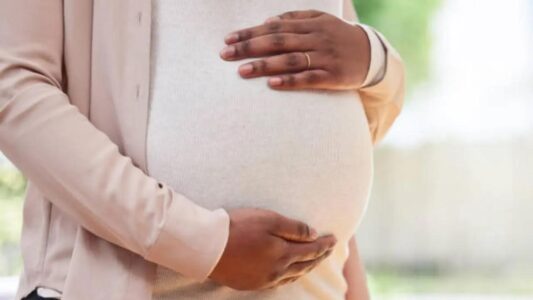
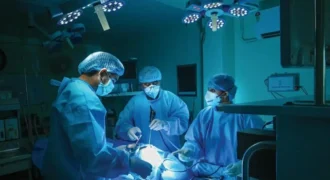
After enduring the heartbreak of repeated second-trimester pregnancy losses and the uncertainty of a condition that made carrying a pregnancy extremely difficult, a 34-year-old Kolkata woman’s journey to motherhood found hope through a rare and high-risk surgical intervention by doctors in the `City of Joy`.
It began as a critically fragile pregnancy but was successfully carried to term, culminating in the birth of a healthy baby girl.
Bidisha Majumder, a dietitian by profession and a resident of Garia, had a journey marked by repeated setbacks. Her first pregnancy in early 2024 ended in a miscarriage. Later that year, she conceived again, but at around 18–19 weeks in January 2025, she went into sudden preterm labour and lost the baby in an emergency. It was during this critical phase at that she came to Manipal Hospital EM Bypass and met Dr Souptik Gangopadhyay at the hospital.
Subsequent evaluation revealed that she was suffering from cervical incompetence, a condition where the cervix is too weak to hold the pregnancy beyond a certain stage, leading to recurrent second-trimester losses. In her case, the condition was attributed to a congenital weakness of the cervical muscles.
Determined to try again, the couple planned a third pregnancy, and she conceived around mid-2025. Given her history, she was closely monitored and underwent a prophylactic cervical cerclage (commonly known as McDonald’s stitch), which is a preventive medical procedure used during pregnancy to reduce the risk of miscarriage or preterm birth at around 13–14 weeks, this is a standard preventive procedure performed vaginally to help keep the cervix closed.
Initially, the pregnancy progressed well. However, at around 20 weeks, a routine ultrasound revealed a critical complication, the cervical length had drastically reduced from a normal 3.5–4 cm to nearly 1 cm, and the amniotic sac (a thin, fluid-filled membrane inside the uterus that surrounds and protects the developing baby during pregnancy) had started bulging through the cervix, signalling an imminent risk of another pregnancy loss.
With limited options available, the medical team recommended a laparoscopic rescue cervical cerclage, a rare and highly specialized procedure performed through minimally invasive surgery. Unlike the conventional stitch, this involves placing a suture higher up near the internal opening of the cervix through the abdomen, offering stronger support. The procedure is technically demanding and carries significant risks, including bleeding, need for transfusion, and complications due to surgery during an ongoing pregnancy.
After extensive counselling, the couple chose to proceed with the surgery as a last resort. The procedure was successfully performed on December 19 in 2025. Following this, the patient was kept under strict observation, advised complete bed rest, and monitored through ultrasound every two weeks to ensure stability and foetal growth. As the pregnancy progressed safely, and with the baby reaching a healthy weight, the doctors planned a timely delivery to avoid any last-minute complications. On March 28 this year, they performed a planned caesarean section. The woman delivered a healthy baby girl weighing approximately 2.2 kg. Both mother and child are currently doing well.
While discussing, Dr Souptik, consultant, Obstetrics & Gynaecology, said, “This was a complex case of recurrent second-trimester pregnancy loss due to cervical incompetence, where even a prophylactic cerclage failed as the cervix continued to shorten and dilate. In such situations, laparoscopic rescue cerclage becomes the only definitive option, despite being a technically demanding and high-risk procedure during an ongoing pregnancy. This is the first case in our hospital where this procedure has been performed, and it remains a rare intervention, with only a handful of such cases, around two–three reported across eastern India. After detailed counselling, the couple opted for the surgery as a last resort. The procedure was successfully performed in mid-December, following which the patient was kept under strict observation, advised rest, and closely monitored through fortnightly ultrasounds to ensure stability and healthy foetal growth. As the pregnancy progressed without further complications and the baby attained a healthy weight, we planned a timely delivery. On March 28, a planned caesarean section was performed, and the patient delivered a healthy baby girl weighing approximately 2.2 kg. Both mother and child are currently doing well.”
Sharing his experience, Ronit Das, a software engineer and the woman’s husband, said, “We had been trying for the past two-three years, and going through two losses was emotionally exhausting for us. When the same complication started happening again in the third pregnancy, it was extremely stressful. Dr Souptik explained everything very clearly and gave us the option of this rare surgery. It was a difficult decision, but we trusted the team and went ahead with it. Today, seeing both my wife and baby healthy feels like a dream come true.”
Kolkata woman successfully delivers baby after two miscarriages